20/08/2026
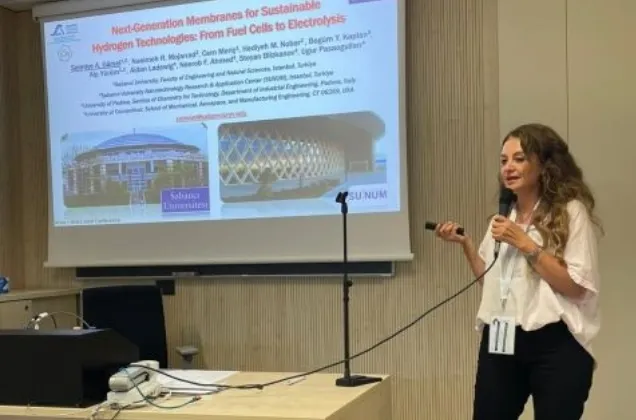
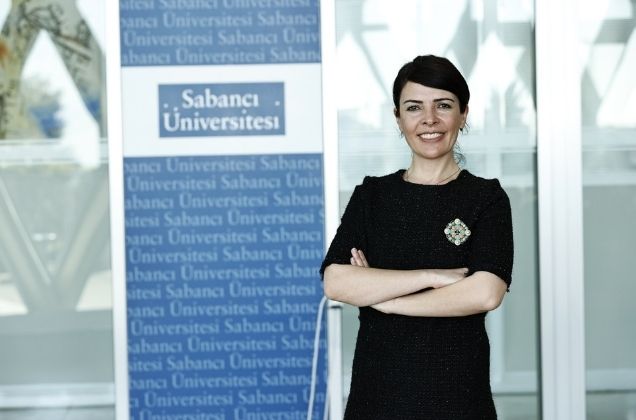
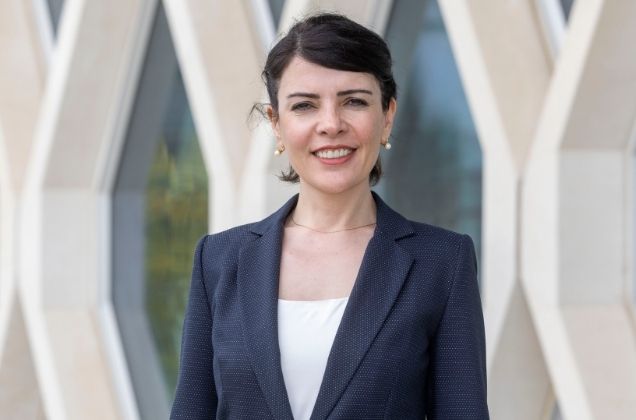
Assoc. Prof. Dr Meral Yüce, a Lead Principal Investigator at Sabancı University Nanotechnology Research and Application Centre (SUNUM), focuses her research on transforming invisible biological or chemical interactions into reliable and selective information. In other words, she and her team detect targets ranging from disease markers to pesticides, heavy metals to drugs, and bacteria. Although the targets differ, their approach is the same: selecting the right recognition molecule, designing the appropriate nanosurface, and verifying what the resulting signal represents.
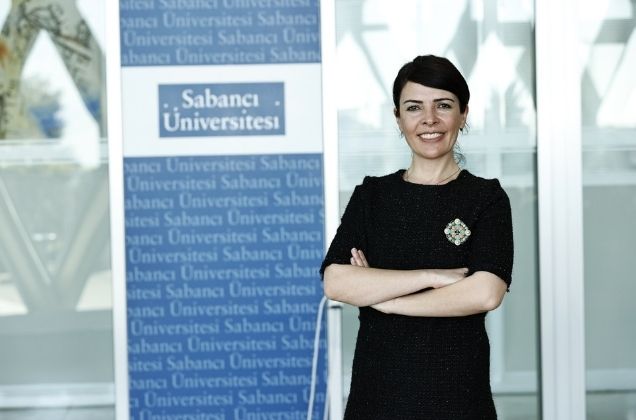
While pursuing her academic career in Türkiye, Dr. Yüce had the opportunity to work at prestigious universities such as Cambridge, Leeds, and Imperial College through international scholarships and research projects. She notes that these experiences refined her academic vision and allowed her to evaluate her approach to science from a new perspective. Yüce says she prefers to continue her academic work in Türkiye and explains the reasons behind this decision as follows: “I felt most at home in Türkiye, both personally and academically. Here, I found an environment where I could build on the knowledge and experience I had gained through research and collaborations, while also supporting the growth of young scientists and maintaining strong ties with the international scientific community.”
We asked her about the secret to her success. Her answers are insightful and guiding for many academics.
What elements are necessary for successful teamwork?
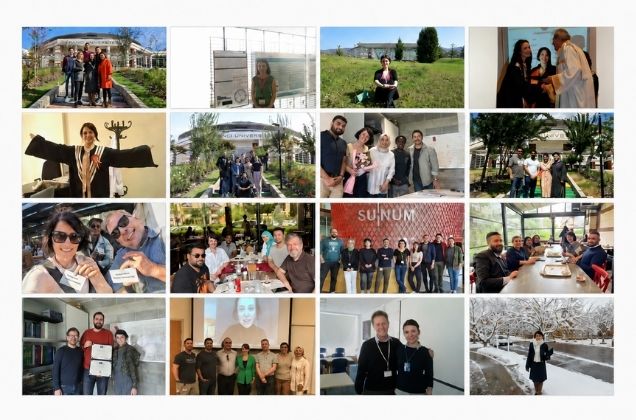
For me, character, work discipline, and work ethic are decisive factors in team building; technical knowledge can be developed over time, but honesty, responsibility, and reliability are indispensable qualities. My projects with numerous young researchers from diverse fields such as biology, chemistry, physics, materials engineering, and computer engineering have shown me that strong teams are composed of people who complement each other, not those who are alike. In such a structure, it's necessary to maintain open communication, share information, avoid personal criticism, fulfill responsibilities on time, and create opportunities for everyone's development. For me, in a good team, the burden of labor and its success are shared.
You place great importance on gender equality in your academic work. Have you achieved this goal at SUNUM?
I believe we have largely achieved this balance in my own research group. However, I don't see equality solely as the numerical balance of male and female researchers. The fair sharing of responsibilities, scientific visibility, participation in decision-making processes, and development opportunities are equally important. My aim is to make equality a natural part of our daily work culture, not just a special practice.
Targeted drug-carrying nanoparticles in cancer treatment have long been a topic of discussion. How long do you think it will take for these technologies to truly become part of routine clinical practice?
It's not accurate to give a single timeframe for these technologies; clinical transition can take years, depending on the level of maturity the system has reached today. A promising lab result is only the beginning. Safety, efficacy, reproducibility, and producibility must be validated step-by-step. Regulatory processes, long-term funding, and retaining expert human resources also determine this timeframe. Our NanoBio4Can researchers are working on different scientific stages of this process.
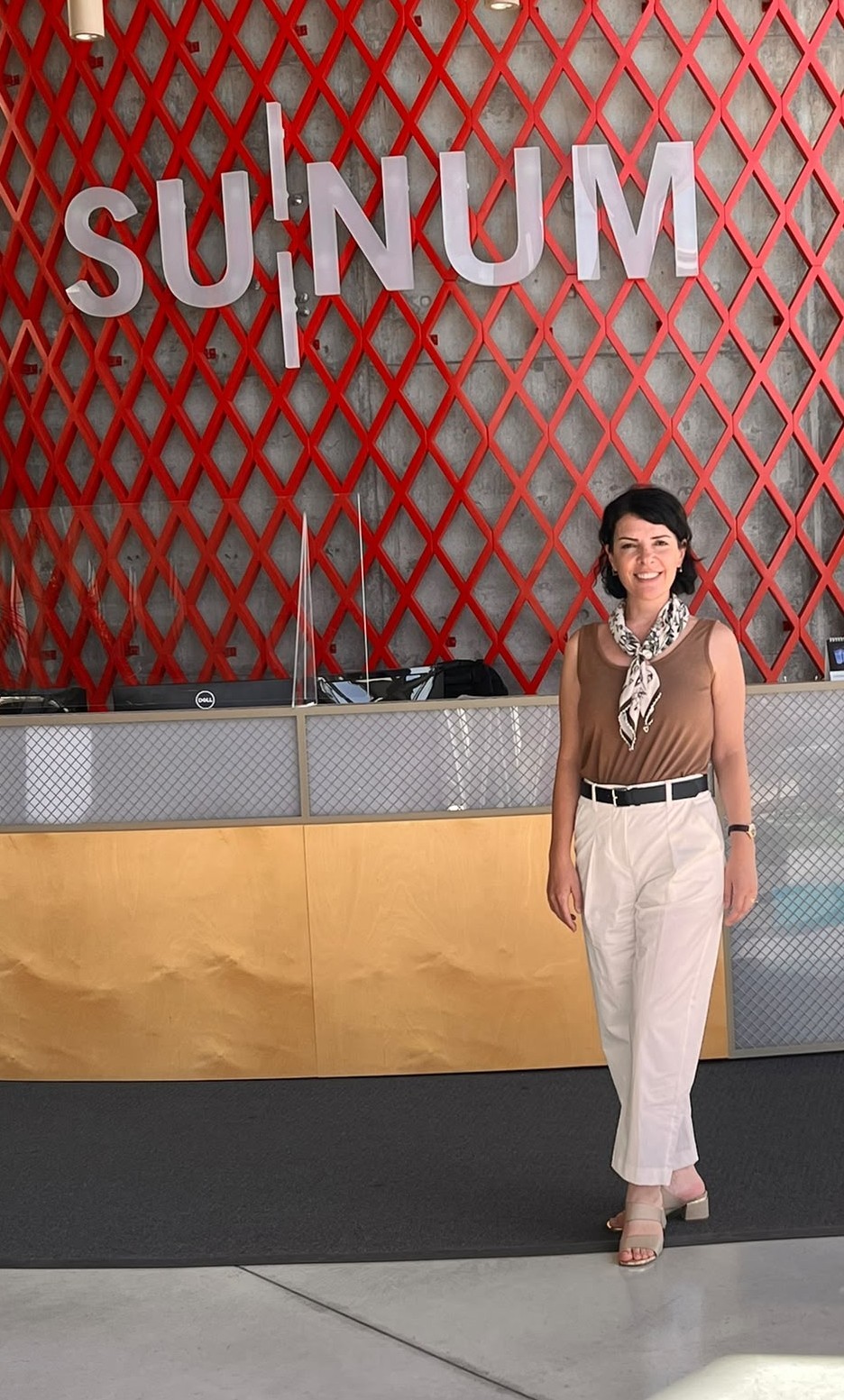
NanoBio4Can is an international, interdisciplinary, and intersectoral program. You coordinate it. What challenges do you encounter in facilitating collaboration between Türkiye's four leading host research centers and international partner organizations?
NanoBio4Can is an MSCA COFUND project supported by the European Union and TÜBİTAK, and coordinated by SUNUM. On an international scale, we host 24 postdoctoral researchers from 15 countries, selected through transparent evaluation processes, for two years at SUNUM, Izmir Biomedical and Genome Center, TÜBİTAK Marmara Research Center, and Koç University Translational Medicine Research Center. We conduct a comprehensive research and training program with 45 academic mentors from the four institutions.
In a program of this scale, sometimes the same problem can have four different answers across four institutions. My role goes beyond simply pursuing scientific goals; it's about ensuring that different institutions work together with common standards and mutual trust. Bringing different administrative structures together on the same platform requires not only scientific coordination but also patience, negotiation, risk management, and collaborative decision-making skills.
Within the context of your LignoNano project, when can a highly sensitive and field-ready analytical device (RAMAN) be developed? What stage are your studies at? When can their positive impact on the country's food exports be seen?
In the LignoNano project under the TÜBİTAK 1004 program, we aim to develop a Raman system that can screen for pesticide residues in food. To this end, we aim to combine high-sensitivity nanoscale sensor surfaces produced under cleanroom conditions, sample preparation steps, the unique spectral "fingerprints" of pesticides, and AI-supported data interpretation in a single system. With the Raman setup we established with our project partner NanoSolar Ltd., we created a spectral library for 14 pesticides and tested the surfaces we developed on real food samples.
We aim to reach a prototype that can be tested in field conditions by the end of 2026. Rather than replacing existing reference analytical methods, the system will provide rapid, on-site preliminary screening of pesticide residues. Its contribution to food exports can only be evaluated after the completion of field verification, standardization, and regulatory compliance processes.
I believe you consider it necessary for your students to go abroad for advanced studies and multidisciplinary experience. But can our country provide the necessary conditions for academics to return?
International experience is invaluable for young scientists to become acquainted with different research cultures and establish lasting scientific networks. However, the decision to return depends not only on a sense of belonging but also on the conditions under which the researcher can continue their work. Türkiye has institutions with strong research infrastructure and a high-quality research environment. Making these opportunities more widespread and long-term will facilitate the transformation of experience gained abroad into new research in our country.
In your opinion, is the biggest obstacle facing young researchers in Türkiye a lack of resources, higher education policies, or something else?
I think the most critical threshold is the transition process to independent research after a PhD. Qualified mentorship, objective evaluation processes, and support that allows young researchers to develop their own scientific questions and establish their first research group are crucial here. For Türkiye's strong human resources and research infrastructure to translate into lasting success, diversifying and strengthening reliable career paths after a PhD is of great importance.
What should be prioritized to increase Türkiye's international competitiveness in the field of nanobiotechnology?
In my view, it is important to translate existing scientific knowledge into practice more effectively to increase Türkiye's competitiveness in nanobiotechnology. In particular, mechanisms that support the transformation of studies in health technologies, diagnostic systems, drug delivery platforms, and food safety into prototypes and products can be strengthened. Establishing collaborations between academia, industry, health organizations, and relevant public institutions at an early stage; and addressing standardization, scaling, intellectual property, and regulatory processes together are also of great importance. For me, the main criterion is that a method used in the laboratory can yield reliable and reproducible results in real-world samples, with different users, and under different production conditions.
There is no doubt that nanobiotechnology will transform human life in the next 15 years. When we look back on history, what discovery do you think will mark this period? And in that discovery, which of your studies currently being conducted in SUNUM laboratories will we see traces of?
I believe that the next fifteen years will be remembered not for a single striking discovery, but for the development of integrated nanobiotechnological systems that can read biological processes at the molecular level and translate this information into personalized diagnosis and treatment.
The nanoscale sensing surfaces and analytical methods that monitor molecular interactions in real time, which we have developed at SUNUM, are among the building blocks of this transformation. I believe our contribution to this field will endure not only through the technologies we develop, but also through the researchers we train and the way they approach science. The most beautiful aspect of this legacy would be if the researchers we train one day surpass us.
Sources:
https://www.sabanciuniv.edu/rehber/KisiselBilgilerCV.php?sicil=2026&dil=Tr
https://www.youtube.com/watch?v=XxBmKONYqts
https://www.youtube.com/watch?v=tn6qrAcvxHs
https://www.youtube.com/watch?v=LscFx6F0cKU
https://www.researchgate.net/lab/Meral-Yuece-Lab
https://sunum.sabanciuniv.edu/tr/projeler/yasam-bilimleri